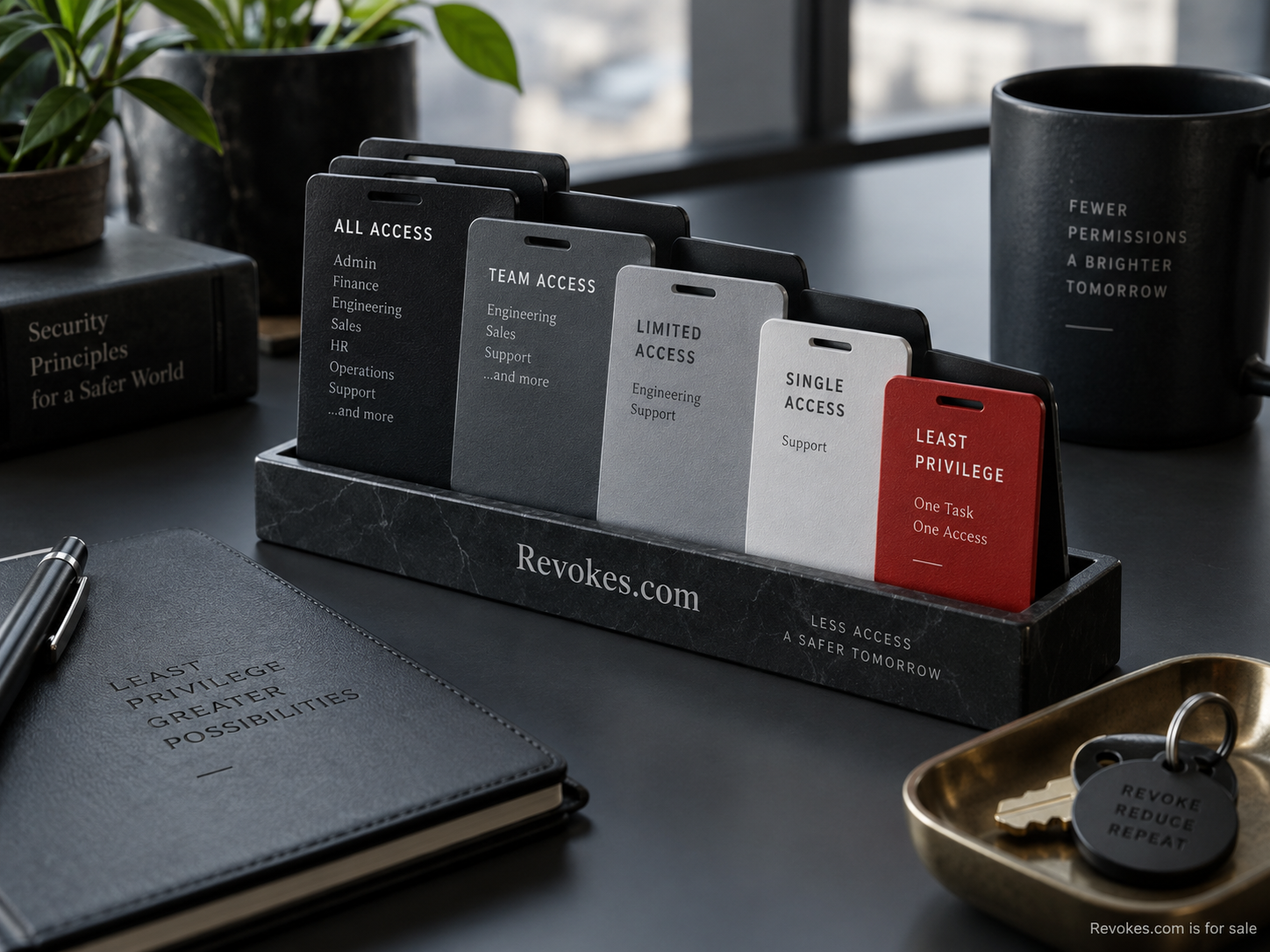
Least privilege has an ending as well as a beginning. A grant that was appropriate for a task can become unnecessary when the task changes or finishes. A useful access model therefore needs a way to identify the reason for a grant and carry a later decision to the system that enforces it. This article focuses on that removal path: ownership, scope, review, and confirmation. It offers design questions for operators rather than a universal permission policy.
Attach access to a purpose
Start with a concrete entitlement in one application. Record the work it enables, the person or service using it, and the owner who can judge whether it remains necessary. A role name such as “editor” may be too broad to explain the business reason. A reference to a project or operating responsibility provides more context. When that responsibility changes, the team has a way to find the grants that may need another decision.
Consider a temporary assignment helping another department publish reports. The person may need a specific project permission for that assignment while keeping their ordinary role elsewhere. If the extra grant is documented as a separate relationship, its end can be reviewed independently. If it is folded into a broad permanent role, removal becomes harder to reason about. The design choice made at grant time affects how much investigation will be needed later.
Model inherited access explicitly
A person can receive the same effective permission through more than one relationship. Removing a direct grant may leave a group-based path intact. Before describing a revoke action as complete, inspect which paths the application can report. A useful review presents those relationships to the operator and explains which one a proposed change targets. If the inventory cannot establish all effective access, its limitations should be visible in the decision.
This is also a reason to avoid treating every access review as a flat list of users and roles. The source of a grant matters. A user may need to leave one group, or a group’s role may need to change for several users. Those actions have different scopes and owners. The reviewer should be able to see the intended target and likely affected population before an operation is authorized. A simple interface can still preserve these distinctions.
Give temporary grants a next decision
A temporary grant can carry an expiry or a review date according to the system and the team’s policy. These are different commitments. An expiry is intended to trigger an end, while a review date asks an owner to make a decision. Label them accurately. A reminder that no one acts on does not perform a removal. The product should make overdue reviews visible without describing them as expired access unless the corresponding control has actually taken effect.
An extension should preserve the new reason and decision maker. The operator may have a valid reason to continue the work, but repeated extensions deserve visibility. A history of decisions helps a later owner understand why a supposedly temporary grant is still present. Avoid making the easiest action a permanent continuation with no explanation. The interface can support a short, specific extension without forcing users through a lengthy essay for every ordinary change.
Turn reviews into executable decisions
A review should produce an outcome for each item: retain, remove, change, or investigate. Those outcomes should have clear meanings and owners. “Investigate” is useful when the reviewer lacks enough information, but it needs a next step. A spreadsheet full of unanswered questions does not help the operator decide what can be safely changed. Route the question to the person who knows the application or business purpose and keep the item visible until resolved.
For a removal decision, carry the target identifier and authorized scope into the execution task. Avoid asking an administrator to reinterpret a broad reviewer comment. The execution record should link back to the review so the operator can see why the change is authorized. Once the action has been attempted, bring its result back to the review. That closes the connection between a decision about access and a change in the system that supplies it.
Make removal practical for the operator
A grant can be easy to create and difficult to remove because ownership or tooling is unclear. Inspect the actual removal route for one entitlement. Who can perform it? Which console is needed? What identifiers must the operator gather? Can they check the result? These questions reveal obstacles that a written policy may not address. Improving the route may be as ordinary as recording an application owner or documenting a supported administrative operation.
For automated paths, define how a failed or uncertain result reaches a person. A queued task should not disappear from a review simply because the automation accepted it. The operator needs to see whether the target system applied the change and whether any verification remains. If the action is manual, provide a place to record the method and outcome. Different mechanisms can share a review without pretending that their evidence is identical.
Keep exceptions narrow and accountable
An exception should describe the particular access being retained, the reason, the approver, and the next review point. It should remain connected to the grant it affects. A broad exception at the person or vendor level may be harder to interpret when several applications are involved. The reviewer should be able to answer which permission is still available and why. That answer should not depend on finding an old private message.
Emergency access requires its own operational design. The organization may need a way to act when ordinary access is insufficient or unavailable. Establish the ownership, use conditions, and follow-up review for that path before it is needed. A revocation plan should account for how emergency privileges end and how their use is recorded. It should also avoid accidentally removing the organization’s only authorized recovery route without a considered replacement.
Consider service identities as well as people
A service identity may have no departure date, yet its purpose can still change. A scheduled job is retired, an integration moves to another provider, or an application changes ownership. Connect the credential or entitlement to the workload and owning team. Otherwise access can remain simply because there is no employee lifecycle event to trigger attention. A durable team reference is often more useful than the name of the person who originally created the record.
Removing service access can affect dependent workloads, so include the relevant owners in planning. A usage signal may help identify activity, but its coverage and gaps need to be understood. A quiet credential is not automatically unused. Combine available observations with application ownership and configuration knowledge. The removal decision should rest on a stated reason and an authorized plan, not an unexplained threshold applied to every service in the same way.
Evaluate the path on a small sample
Choose a few entitlements with different sources: one direct grant, one inherited membership, one temporary privilege, and one service permission. Trace each from its business reason to its removal method and confirmation. Record where the team lacks an owner, a stable identifier, or a supported check. This exercise can produce specific improvements without requiring a complete redesign of the access model. It also gives the team a clearer picture of which reviews can lead to action today.
A useful measure is the number of removal decisions still waiting for execution or verification, with age and owner visible. Another is the number of items whose purpose cannot be established. These are proposed operating measures, not evidence of a security guarantee. They help the team focus on unresolved work. Least privilege becomes more manageable when an appropriate grant can end through a clear, owned path rather than an improvised search across systems.
Ask about Revokes.com
Describe the access, identity, or entitlement product this name could become. Purchase interest and partnership proposals are welcome.
Inquire