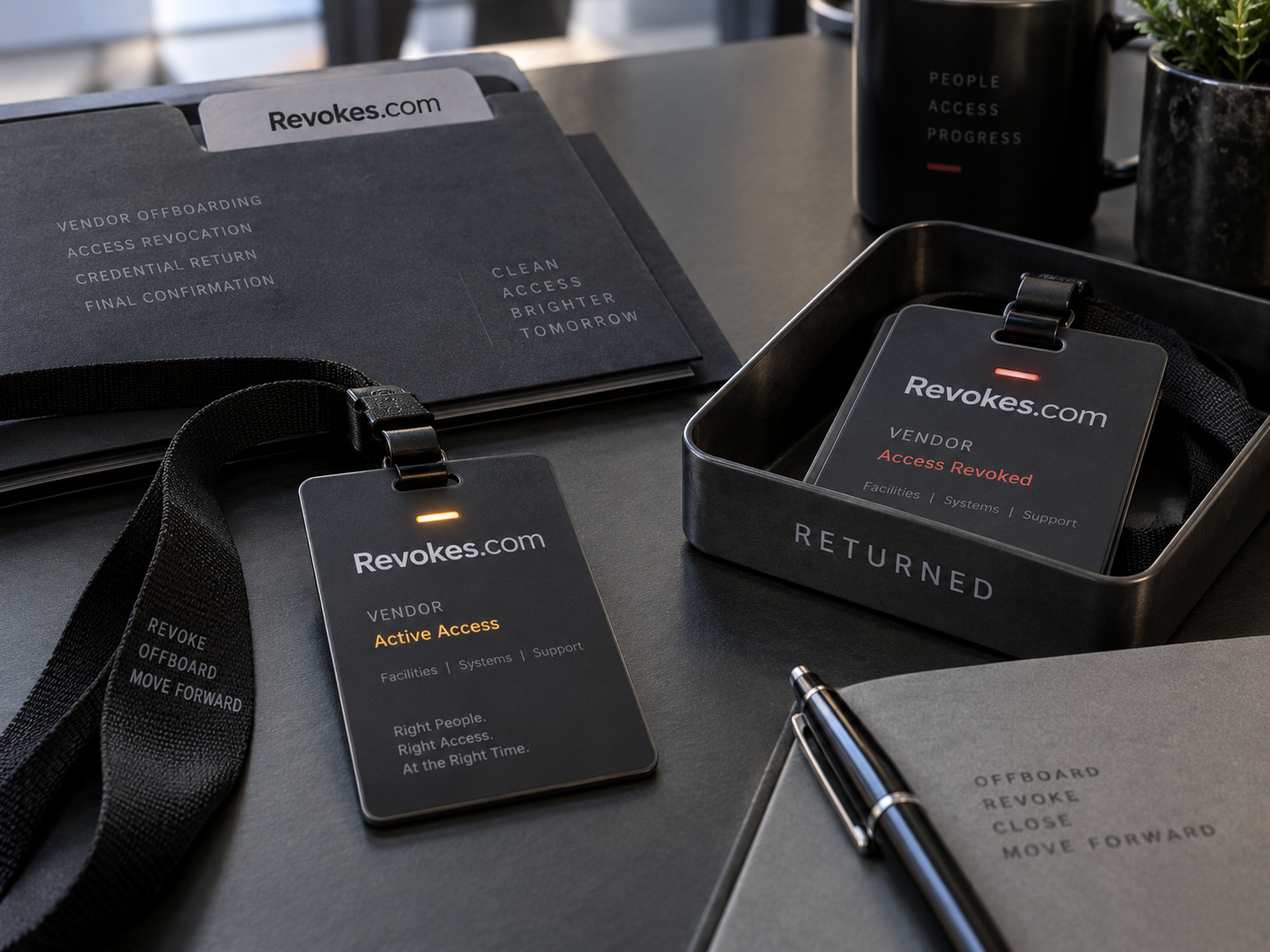
Revokes.com could support a product for ending partner and vendor access with a clear record of the relationship involved. The buyer might be an operations team that works with external agencies, contractors, or service providers. Its recurring problem is that a commercial relationship and its technical access live in different places. Someone knows the engagement has ended, but no single record explains which people and credentials were connected to it.
Organize around the engagement
A useful first product could make the engagement its primary record. That record would name the internal sponsor, external organization, work being performed, expected end date, and systems used. Individual accounts would sit underneath it. This matters when one vendor works on several projects. Ending a website redesign should not automatically end a separate support arrangement with the same company. The product needs a boundary smaller than the vendor’s name.
An account can also serve more than one engagement. The interface should show that relationship before proposing removal. An operator may need to withdraw one project role while keeping another. The product should ask for a decision when the scope is ambiguous, with enough context for the sponsor to resolve it. A broad “offboard vendor” button can be useful only when the underlying target list has been checked.
Build the list before the last day
The first version might connect an engagement record to a manually reviewed access list. Each item could include the application, account identifier, role, internal owner, and source of the information. A sponsor’s recollection is a starting point, while an application’s membership list is a different kind of evidence. Showing that distinction helps operators decide what still needs checking. It also avoids presenting an incomplete import as a complete inventory.
Questions for the sponsor should be concrete. Did the partner receive shared folders? Did anyone invite an additional collaborator? Is there a service account that runs a scheduled job? Does the team use a shared credential that needs a separate change? These prompts can reveal work that a list of named users misses. The product should allow an operator to add a discovered item without losing the history of the original request.
Separate access from the handover
The final day may include transferring documents, changing ownership of a repository, redirecting a notification, and removing permissions. These are related tasks with different effects. A product can keep them in one engagement view while giving each its own owner and status. The sponsor should be able to see that content was transferred even if an application administrator still has an access change to finish.
An illustrative handover might move project ownership to an internal team before withdrawing the partner’s administration role. Another situation may require immediate access removal while the internal team sorts out ownership afterward. The product should support an authorized sequence selected for the engagement. It should not assume that a generic checklist can decide the timing for every organization or replace the people responsible for that decision.
Make exceptions small and visible
Sometimes one person needs access for a short follow-up task after the main engagement ends. The exception should specify the person, system, allowed work, approver, and review or expiry date. Keeping the entire vendor active because one task remains makes the exception larger than necessary. The product could help the sponsor request a narrow continuation and show it separately from the access already removed.
An exception should remain visible after the main offboarding request is marked substantially complete. Otherwise the green parent status can hide the remaining grant. A useful summary might show completed removals alongside one approved continuation, including who owns its next review. The distinction helps another operator answer the simple question of what the partner can still do today, without reading every comment in the history.
Coordinate the people doing the work
The product’s users may include a sponsor, an IT administrator, and the owner of a specialist application. Each needs a clear task with enough context to act. An administrator should receive a specific account and scope, not a forwarded email asking to “remove everything.” A sponsor should receive unresolved questions about the engagement, rather than a stream of low-level connector errors they cannot interpret.
Handoffs need a place for blockers. An application owner may be unavailable or the account identifier may not match the expected person. The item should keep its owner and next step until resolved. A pending item is more useful than a guess recorded as complete. When the task changes hands, the new operator should see what has already been checked and what remains uncertain.
Evaluate a real operational improvement
For a pilot, use a small set of representative engagements and compare the work with the team’s existing approach. Look at how many access items were discovered late, how often a sponsor had to clarify scope, and whether a second operator could reconstruct the final state. These proposed measures help test the product idea. They do not establish a security result or imply that every relationship can be closed automatically.
Revokes.com fits a business that makes the end of a partner relationship understandable across teams. A first offer could focus on a single kind of engagement and a modest set of applications. If this is the intended direction, an inquiry can describe the customer, the relationship being managed, and the handoff that currently causes trouble. The name can then be evaluated against a concrete product rather than a broad category label.
Ask about Revokes.com
Describe the access, identity, or entitlement product this name could become. Purchase interest and partnership proposals are welcome.
Inquire